
Addressing Fall Risks Through Community and Professional Support
Falls usually happen due to a factor or a combination of factors that can be prevented. However, they may not be addressed effectively without appropriate support from others.
The good news is that there are family members, friends, health care professionals and a wide range of programs and services that are available to help address any concerns you may have about falls whether it’s for yourself or for others in your community.


Consulting Your Primary Care Provider
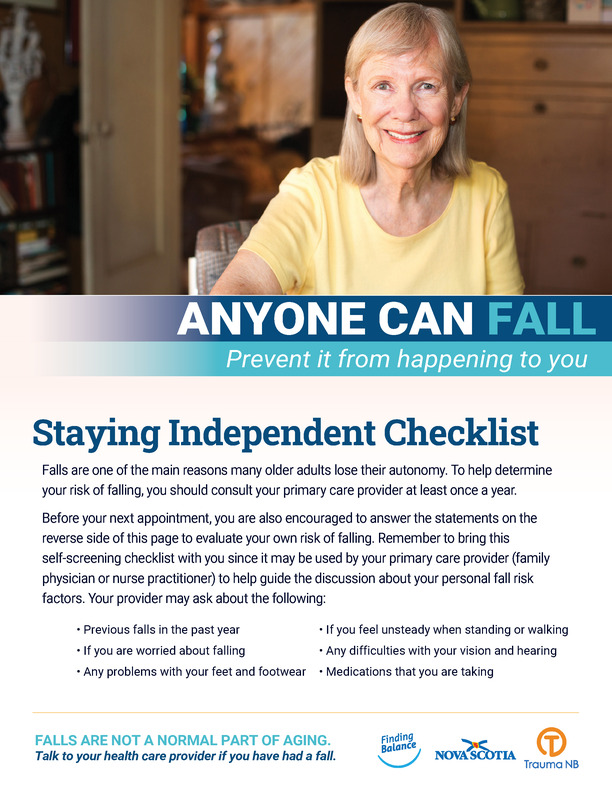
It is recommended that all adults 65 years and older be screened at least once a year by their primary care provider (family physician or nurse practitioner) to help identify and address their risk of falling. To help with this process, remember to bring your completed copy of the Staying Independent Checklist.
However, if you do not currently have a provider or your provider is closing their practice, you are encouraged to call 8-1-1 or visit Nova Scotia’s Need a Family Practice Registry to ensure that your name is added to the Registry.
Consulting an Allied Healthcare Professional
In addition to seeing their primary care provider and pharmacist annually, older adults can get even more support to help reduce their risk of falls by consulting allied healthcare professionals such as nutritionists, physiotherapists, and optometrists when needed.
Keep in mind that a fall can lead to serious physical, psychological and socio-economic consequences if it is not addressed the right way through a collaborative approach with the help of healthcare professionals, caregivers and loved ones.
A nutritionist is a healthcare professional who advises others on matters of food and nutrition and their impacts on health. This can be particularly important for older adults since they require fewer calories to maintain their weight but not fewer nutrients. Consider consulting a nutritionist to help reduce your risk of falls by assessing your nutritional status and making simple changes to your diet such as including more calcium rich foods.
Optometrists are healthcare professionals who provide primary eye care by completing examinations to diagnose and manage various vision abnormalities. This is especially important since the likelihood of developing eye conditions such as glaucoma or macular degeneration increases as we age.
That is why all older adults should visit their optometrist for a comprehensive eye exam at least once a year to assess their eye health and detect any changes to their vision. For a list of available optometrists near you, please click on the following link.